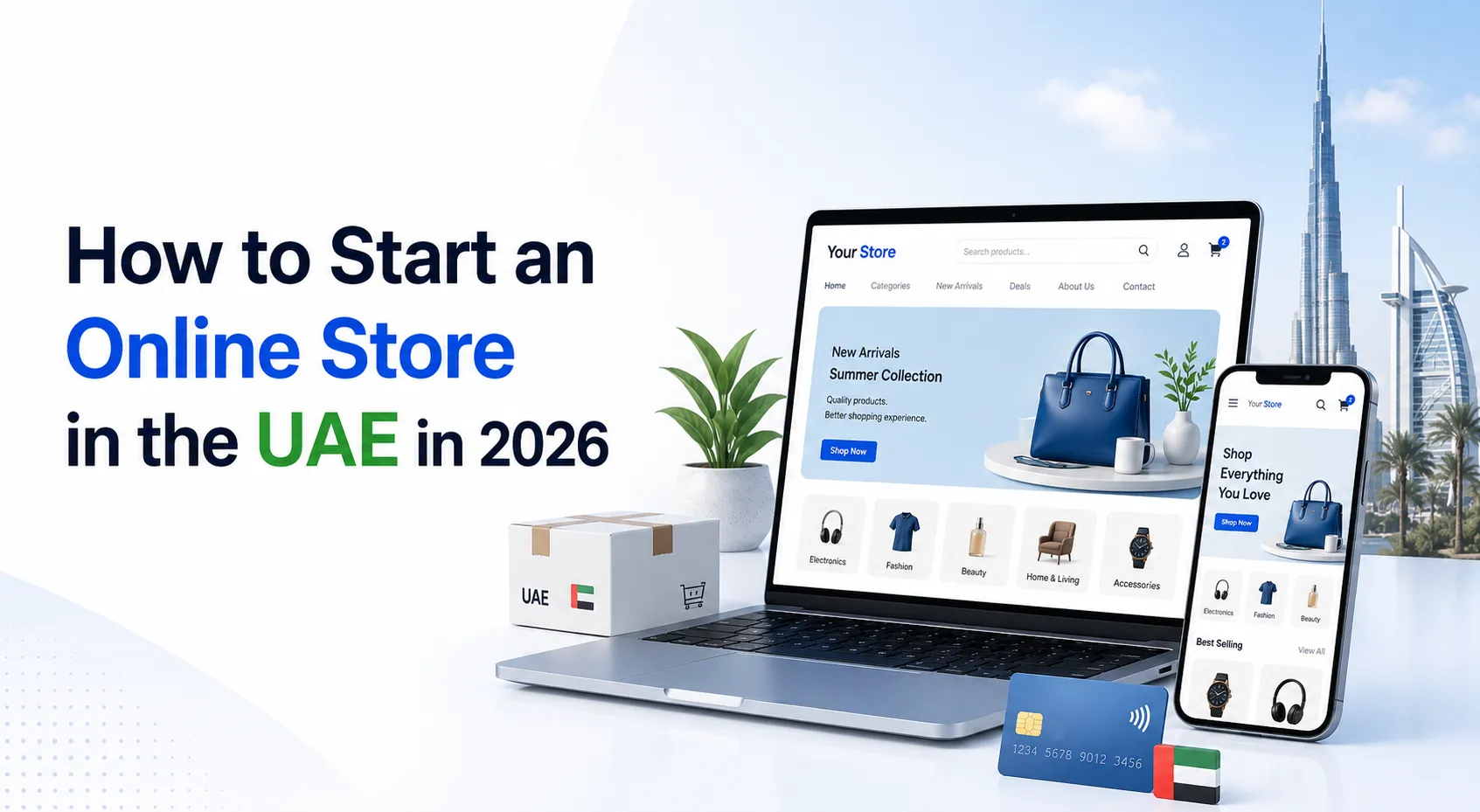
Starting an online store in the UAE can seem complicated when you are thinking about your business licence, products, website, payments, delivery and marketing all at the same time.
The process becomes much easier when you break it into clear steps.
To start an online store in the UAE, you generally need to:
- Decide what you are going to sell.
- Understand your target customer.
- Make sure your business has the appropriate licence and activity.
- Choose your business name and domain.
- Build your ecommerce website.
- Add your products and store information.
- Prepare payment and delivery methods.
- Test the complete customer experience.
- Launch your store and start attracting customers.
This guide explains each step in simple terms so you can move from an idea to a functioning online store.
1. Decide What You Want to Sell Online
Before thinking about website designs or advertising, start with the most important question:
What will customers buy from you?
You might already own a physical shop and simply want to start selling your existing products online.
Or you may be starting a completely new business.
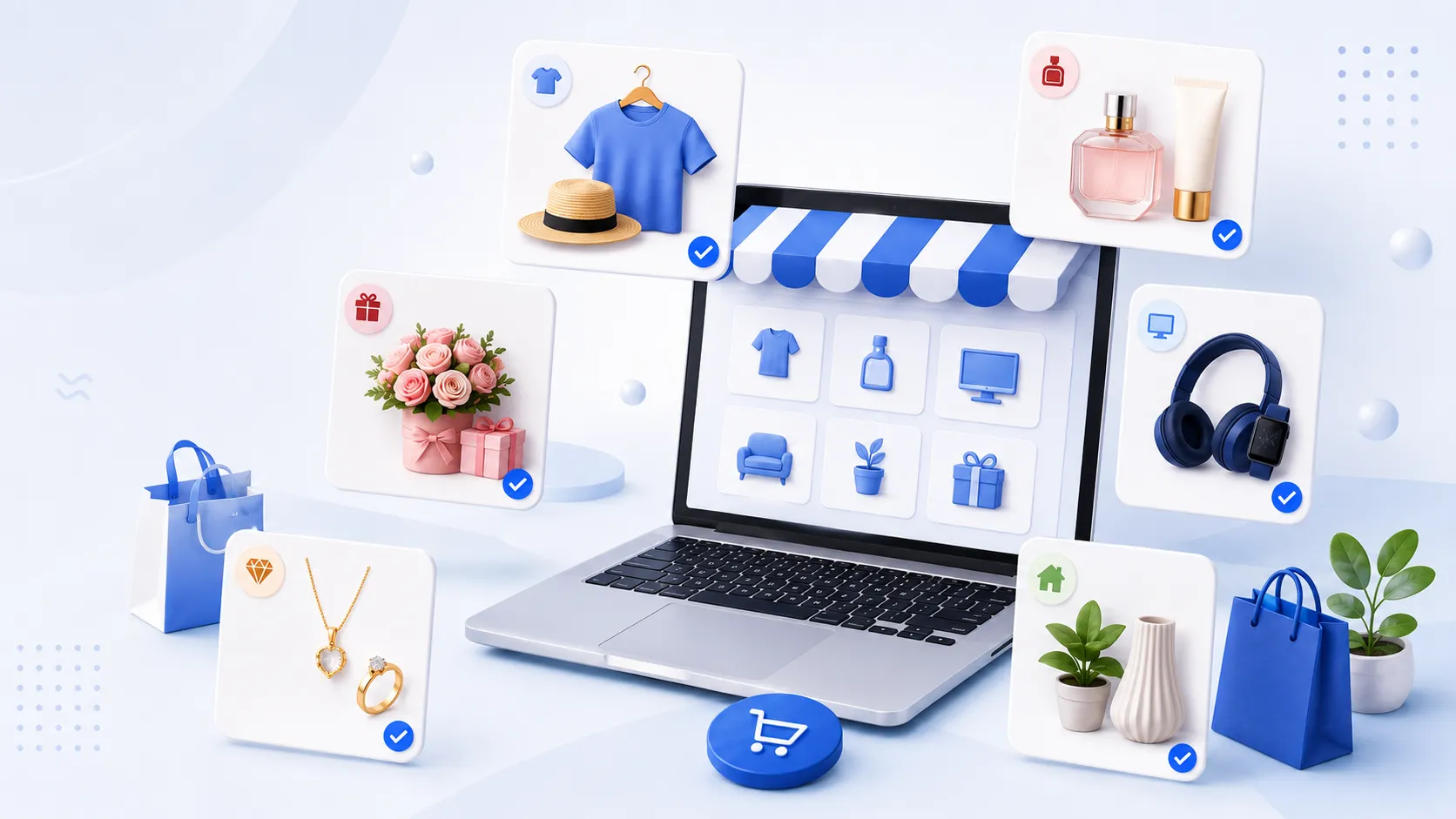
Common ecommerce categories in the UAE include:
- Fashion and clothing
- Perfumes
- Beauty and skincare
- Jewelry and accessories
- Flowers and gifts
- Electronics
- Home décor
- Grocery and specialty food products
- Handmade products
- Business supplies
- Niche products for specific communities
You do not need hundreds of products to start.
For many new businesses, launching a smaller, well-organized collection is better than uploading hundreds of poorly presented products.
Start with the products you believe customers are most likely to buy.
For each product, try to prepare:
- Product name
- Price
- Clear photographs
- Short description
- Detailed information when necessary
- Sizes or variations
- Available colors
- Stock quantity
- Category
- Delivery information
This information will later become the foundation of your online product catalog.
2. Know Who Your UAE Customers Are
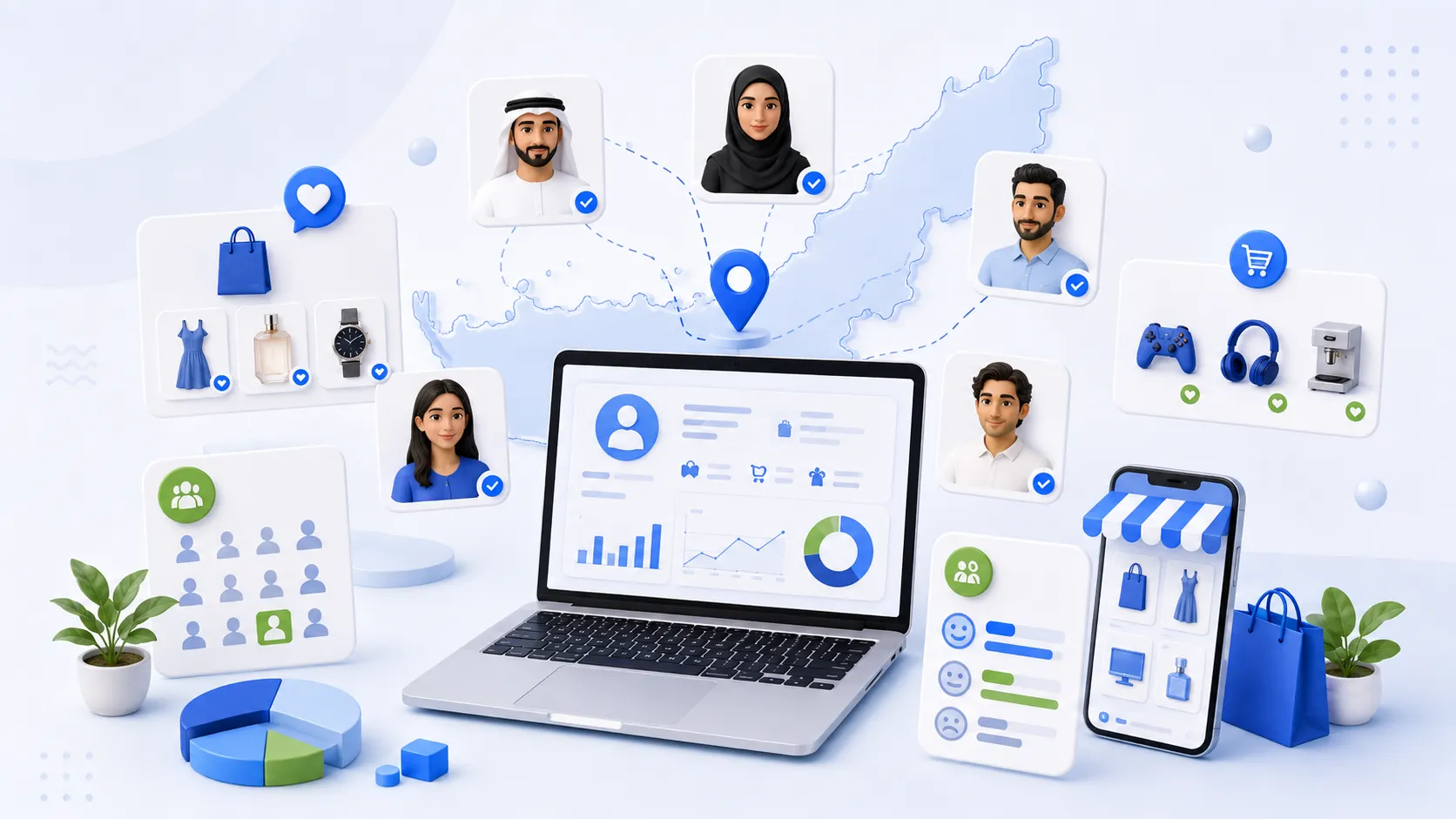
A common ecommerce mistake is trying to sell to everyone.
Instead, ask:
Who is the store actually for?
For example, imagine you sell perfumes.
There is a major difference between building a store for affordable everyday fragrances and building a premium store selling luxury oud and gift collections.
The products may belong to the same general category, but the customers, photographs, prices, branding and marketing can be completely different.
Think about:
- Who normally buys your product?
- Where in the UAE are they located?
- What price range are they comfortable with?
- Do they usually discover products through Google, Instagram, TikTok or other channels?
- What information do they need before buying?
- What would make them trust a new online store?
You do not need a complicated market-research document.
You simply need a clear understanding of the person you want to serve.
That understanding makes decisions about your website, products and marketing much easier.
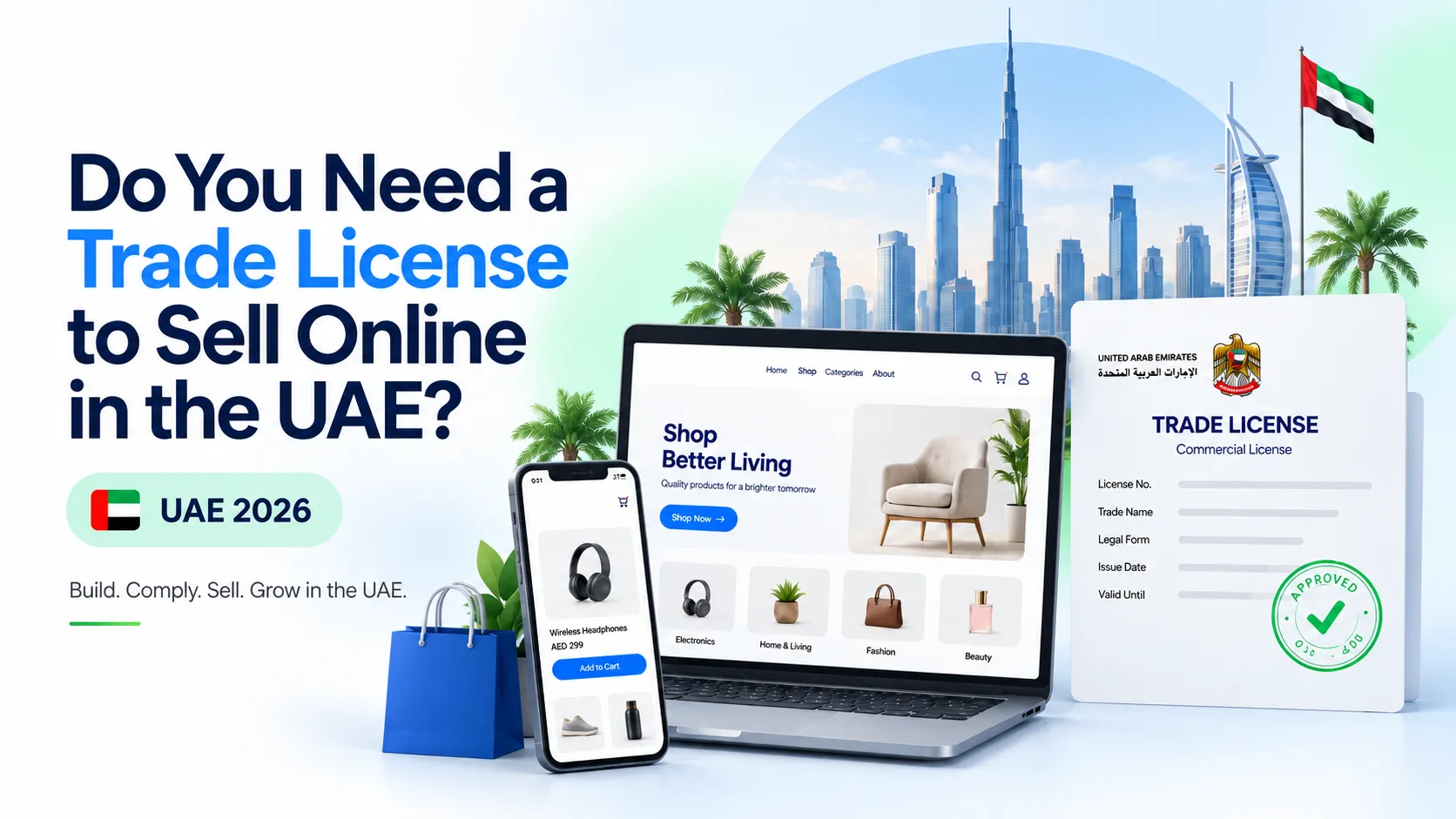
3. Make Sure Your Business Is Properly Licensed
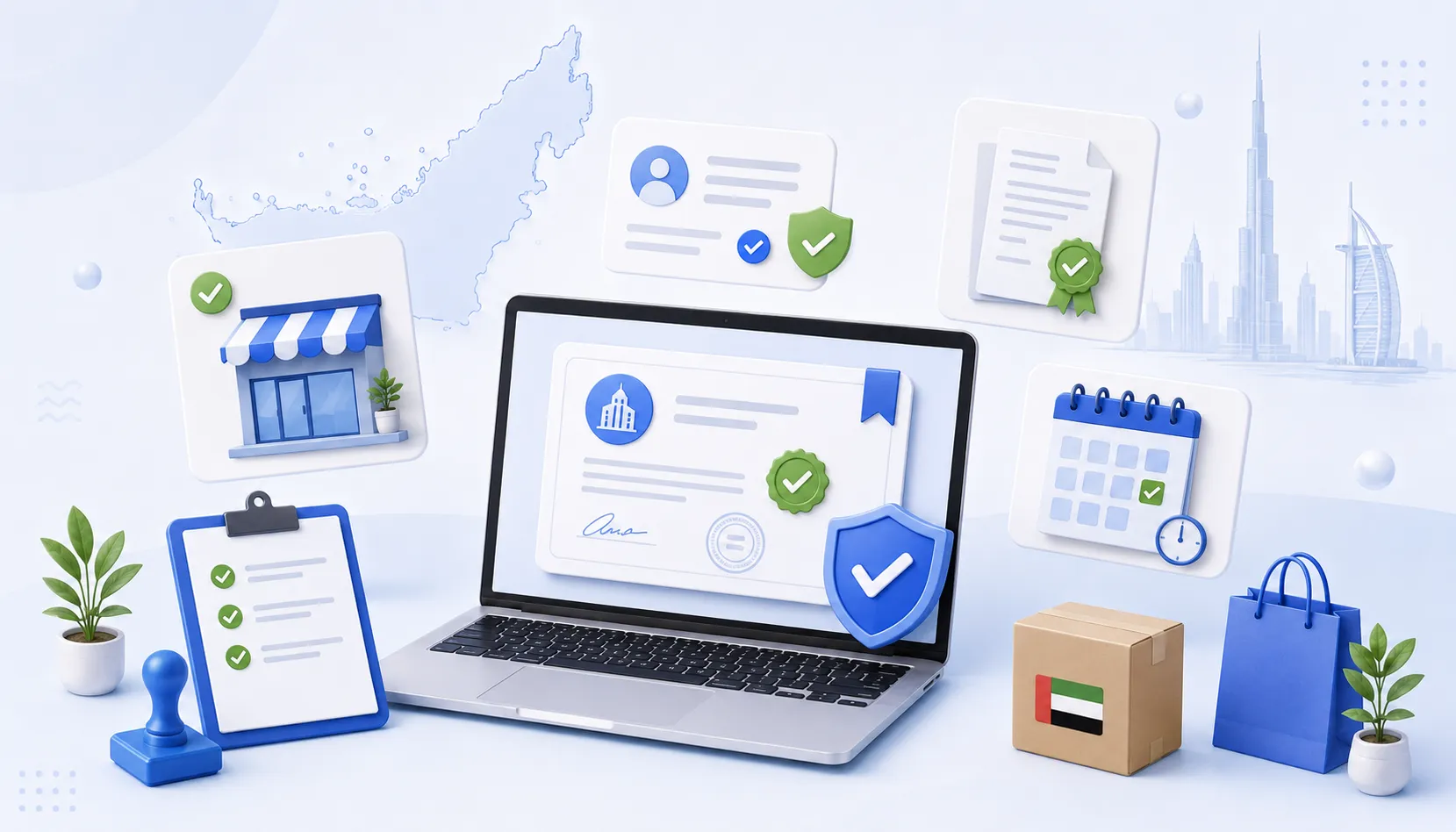
Building a website is only one part of starting an ecommerce business in the UAE.
You also need to make sure your business is legally permitted to conduct the activity you plan to operate.
The UAE Government explains that businesses selling products or services online need the appropriate commercial licensing or ecommerce activity, with licences available through mainland economic departments and relevant free-zone authorities.
Your exact requirements depend on factors such as:
- Your emirate
- Mainland or free-zone setup
- Business activity
- Products or services being sold
- Legal structure
- Whether additional approvals apply to your products
If you already own a UAE company, check whether your existing licence includes the activity required for your ecommerce operations.
If you are opening a new company, compare the available mainland and free-zone options before deciding.
Do not choose your licence only because it is the cheapest option.
Think about what the company actually needs to do now and what it may need to do later.
What About VAT?
VAT is another area businesses should understand as they grow.
According to the UAE Federal Tax Authority, mandatory VAT registration generally applies when taxable supplies and imports exceed AED 375,000, subject to the applicable rules and exceptions.
Tax circumstances differ between businesses, so use the Federal Tax Authority or a qualified tax adviser for decisions concerning your specific company.
The important point is simple:
Your online store and your business operations should be planned together.
4. Choose a Brand Name and Domain
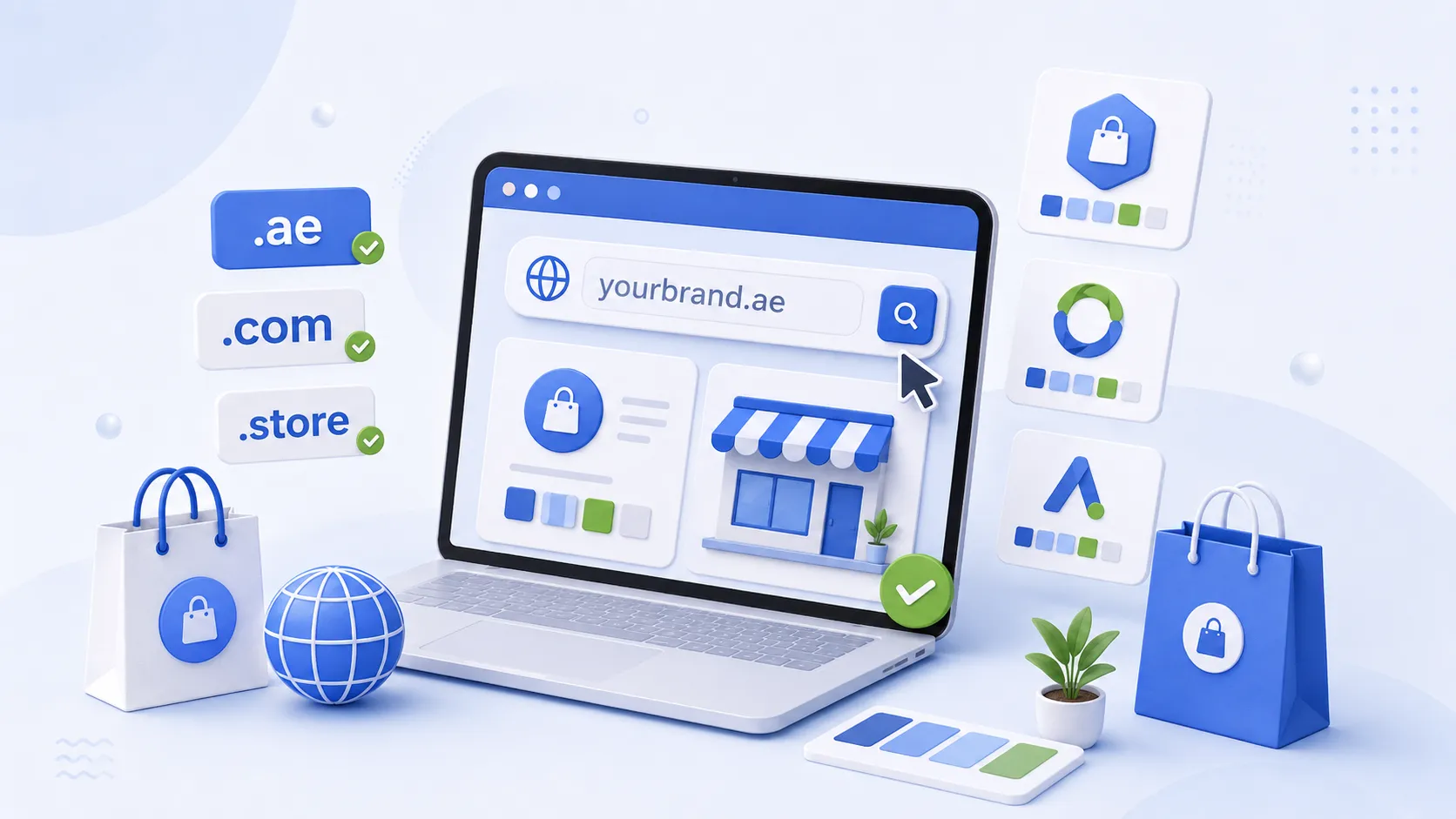
Your website needs an address.
For example:
yourbrand.ae
or:
yourbrand.com
This is your domain name.
A good domain should normally be:
- Easy to remember
- Easy to type
- Related to your brand
- Short enough to share easily
- Free from unnecessary numbers or complicated spelling
Imagine hearing the domain name once during a conversation.
Could you remember it and type it correctly later?
If not, it may be too complicated.
Your own domain also makes a store feel more established than sending every customer to a social media profile or temporary product link.
Your domain becomes part of your brand.
It can appear on:
- Business cards
- Packaging
- Advertising
- Email signatures
- In-store material
- QR codes
Choose something you will be comfortable using long term.
5. Build Your Online Store
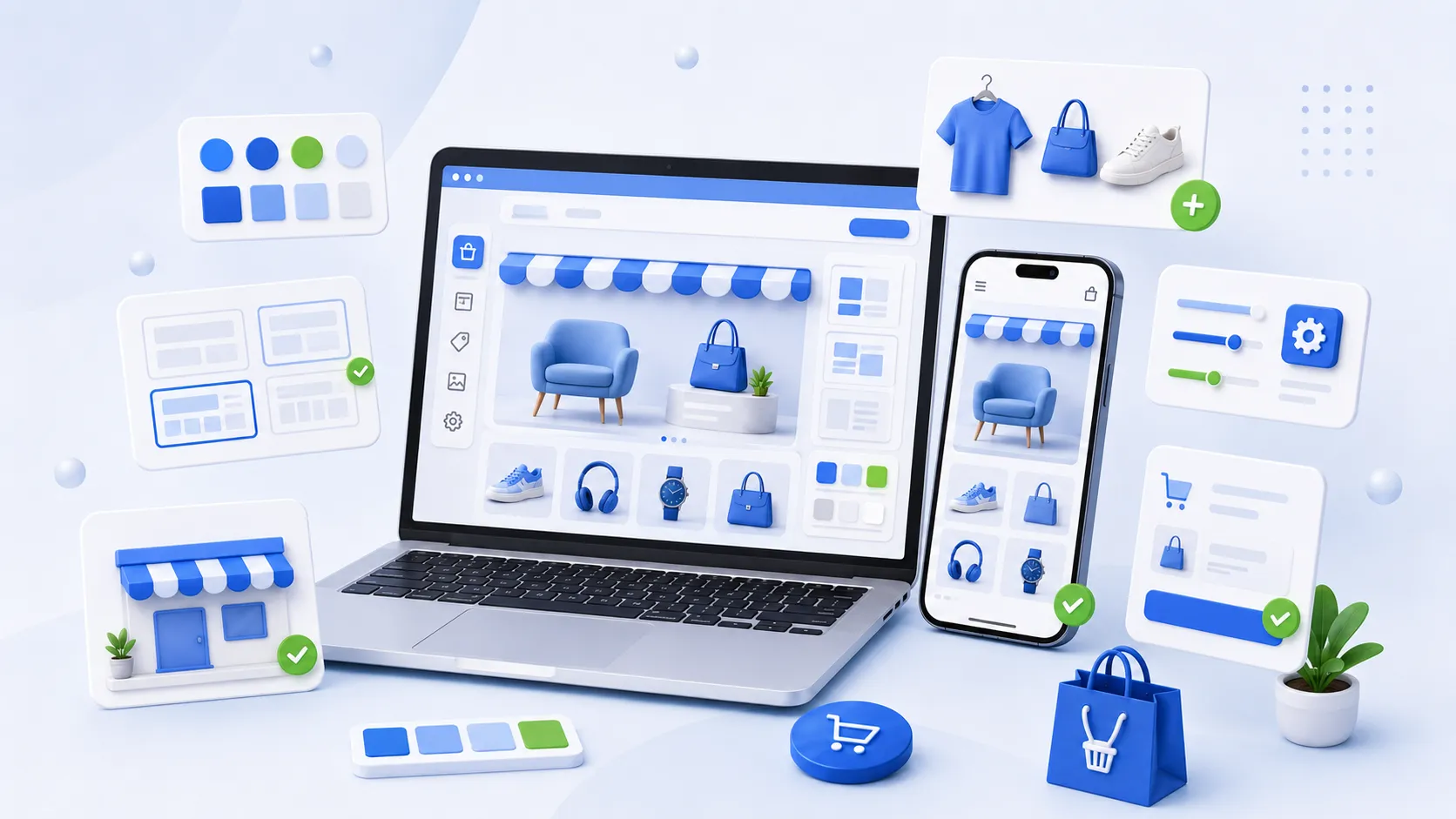
Now you need the actual ecommerce website.
There are generally two approaches.
Option 1: Custom Ecommerce Development
A developer or software company builds the ecommerce system specifically for your business.
This can be appropriate when your company needs unusual workflows, complex integrations or functionality that standard ecommerce platforms cannot provide.
However, custom development can require more time, technical management and budget.
Option 2: Use an Online Store Builder
An online store builder for UAE businesses gives you the core ecommerce structure without requiring the entire system to be developed from scratch.
For most small businesses, new brands, social sellers and local retailers, this can make launching much simpler.
A good ecommerce store should give you a way to manage important areas such as:
- Products
- Product categories
- Store design
- Orders
- Customer information
- Promotions
- Payment configuration
- Delivery information
- Store content
- Domain
- Mobile storefront
Storexio, for example, is an ecommerce website builder for UAE businesses designed to bring these parts together in one platform.
The goal is not simply to create a nice homepage.
You need a store that customers can actually use and that you can manage after orders start arriving.
6. Build Product Pages That Answer Customer Questions
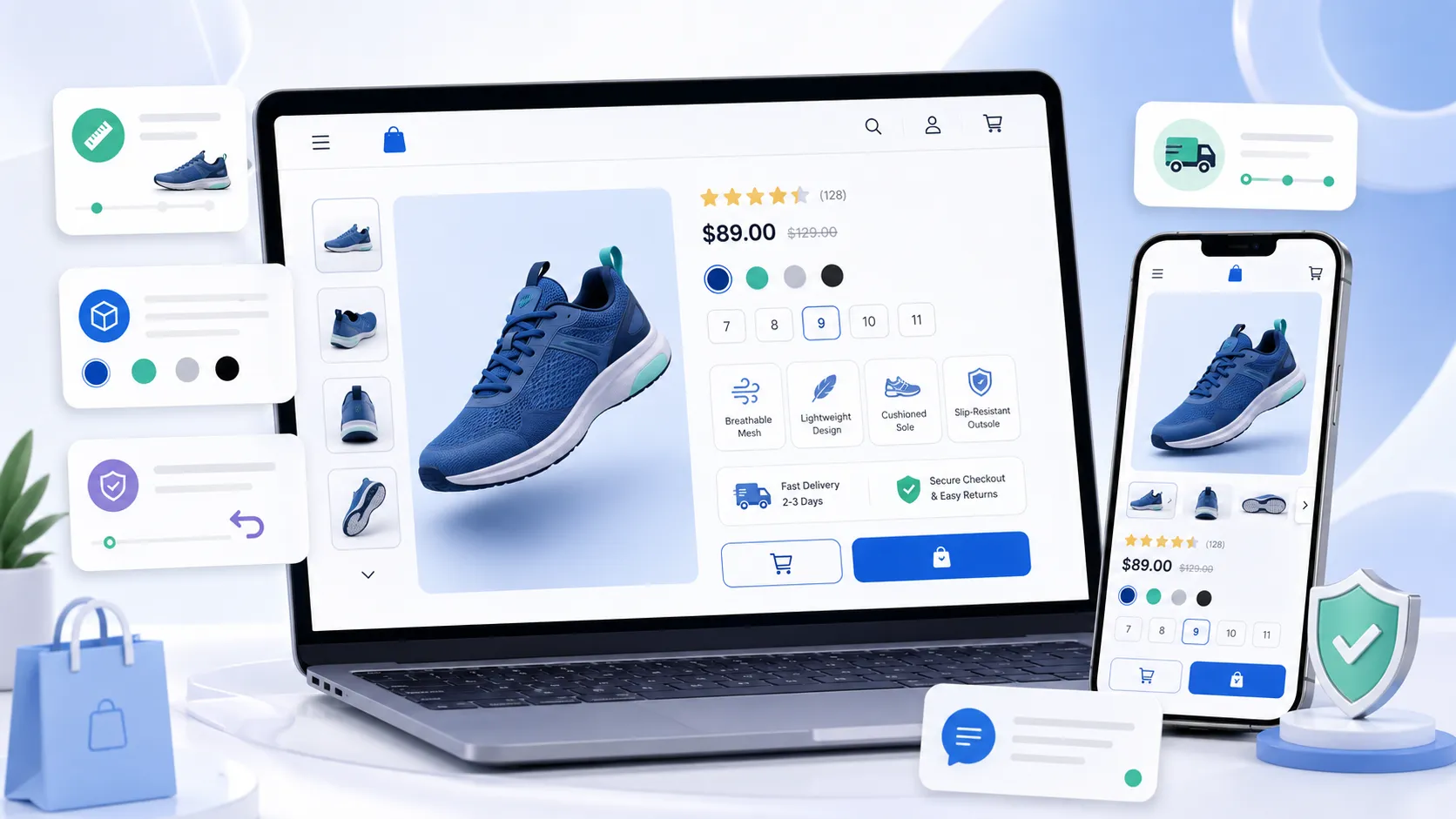
Your product pages are some of the most important pages in your entire ecommerce website.
A customer cannot physically touch, inspect or try your product through a screen.
Your product page has to reduce that uncertainty.
A useful product page normally includes:
Clear Product Name
Avoid confusing internal product codes as the main title.
Use the name customers actually understand.
Good Product Images
Show the product clearly.
When useful, include different angles, details, packaging, size comparisons or photographs showing the product being used.
Price
Make the price easy to find.
Do not force customers to search around the page for basic purchasing information.
Useful Description
Do not write descriptions only for Google.
Write them for the person deciding whether to spend money.
Explain what the product is, who it is for and the important information the customer needs.
For example, an electronics product might require specifications.
A perfume might need fragrance notes and bottle size.
A clothing product may need material, sizing and care information.
A flower arrangement might need size and delivery information.
Different products require different details.
Variations
If the product has different:
- Sizes
- Colors
- Models
- Quantities
- Materials
- Flavors
- Packages
make those options easy to understand.
Delivery and Payment Information
Customers should not reach the final stage of ordering before discovering important conditions.
Make delivery expectations and available payment options clear.
7. Prepare Payments, Delivery and Store Policies
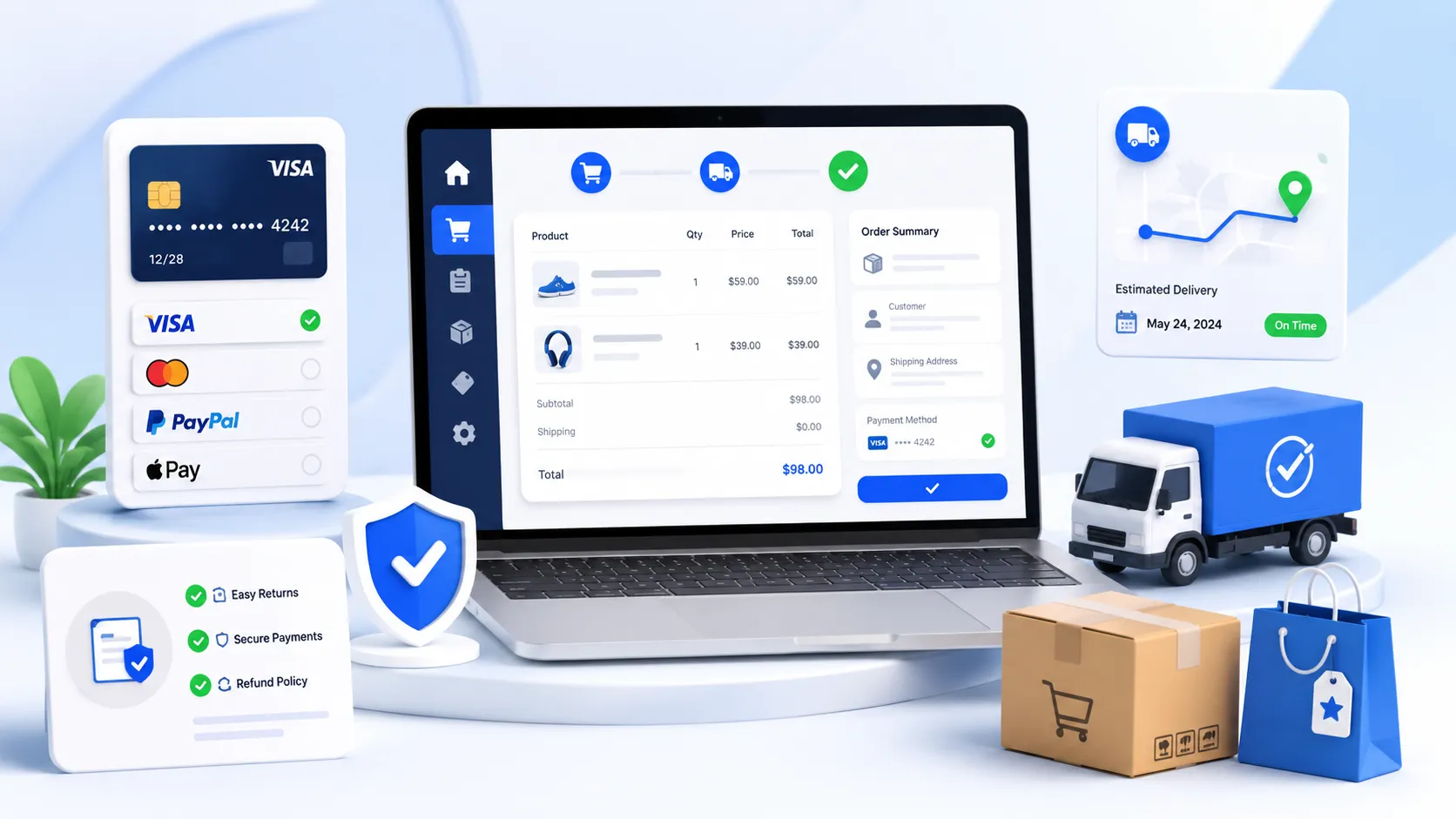
A beautiful store is not useful if customers cannot comfortably complete an order.
Before launching, decide how the order moves from the customer's screen to their door.
Payment
Determine which payment methods your business will support.
Your options may depend on your ecommerce platform, business setup and payment provider.
The important part for customers is clarity.
They should know how they can pay before placing an order.
Delivery
Decide:
- Where you deliver
- Delivery fees
- Estimated delivery times
- Same-day or next-day availability, if applicable
- Whether some locations cost more
- How customers receive updates
Do not promise delivery speeds your business cannot consistently meet.
Reliability is more valuable than an unrealistic promise.
Returns and Exchanges
Prepare clear policies covering areas relevant to your business.
Depending on what you sell, customers may want to know:
- Whether returns are accepted
- Exchange conditions
- Time limits
- Product-condition requirements
- How refunds are handled
- Items that may not be returnable
Your store should make important buying conditions easy for customers to find.
8. Make Sure Your Online Store Works Well on Mobile
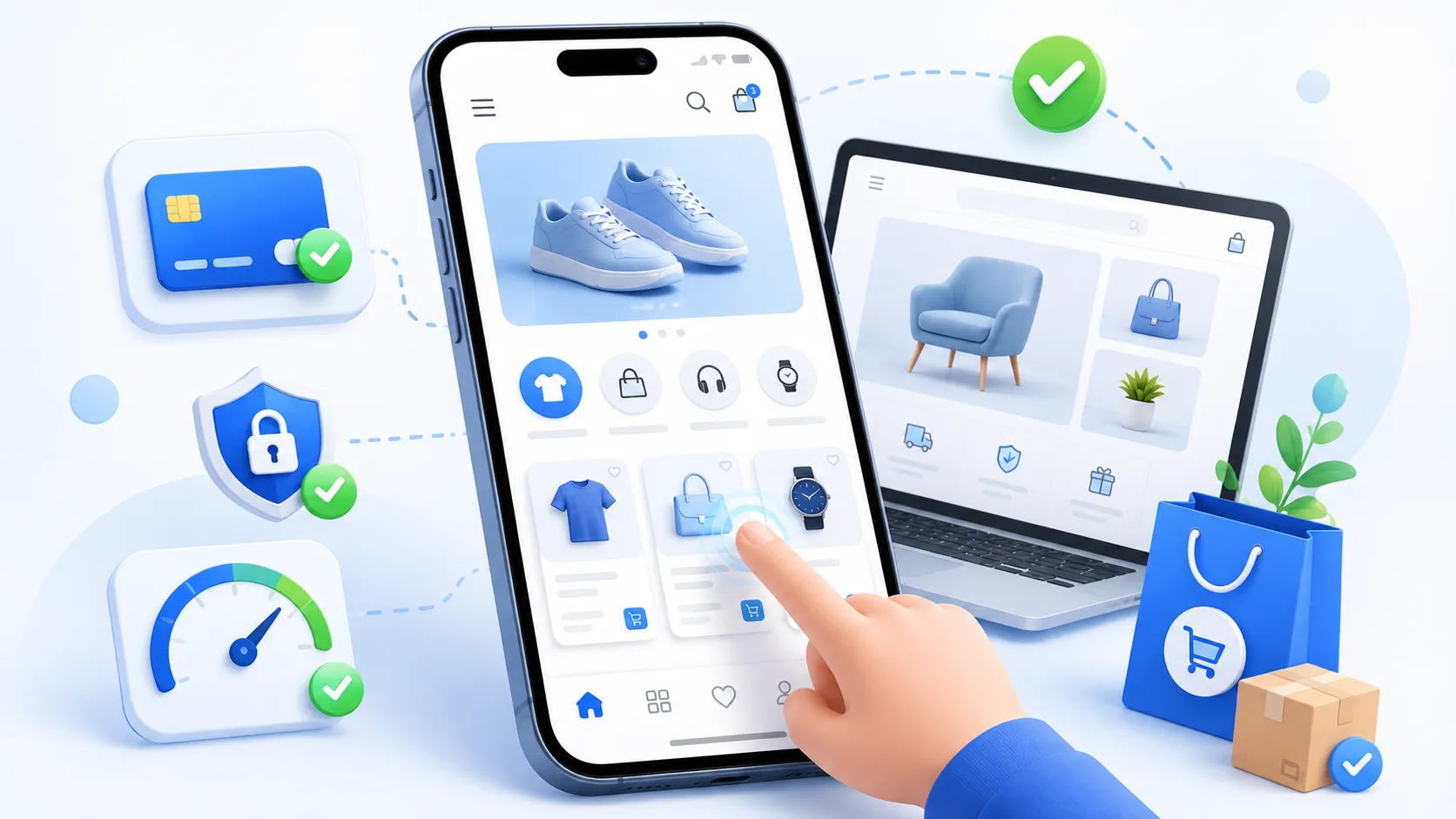
Do not treat the mobile version of your ecommerce website as an afterthought.
Customers may discover your products through social media, search results, advertisements or links shared through messaging apps and open your website directly on their phones.
Google also uses the mobile version of website content for indexing and ranking under mobile-first indexing.
Before launching, open your website on an actual phone.
Check:
- Is the text easy to read?
- Are product photos clear?
- Can you open the menu easily?
- Are buttons large enough?
- Can customers select product options?
- Is important information visible?
- Can customers complete an order?
- Does anything overlap or disappear?
- Does the site feel unnecessarily slow?
A mobile-friendly online store is not simply a desktop website made smaller.
The whole shopping journey needs to be comfortable on a smaller screen.
9. Test Your Store Before Launching
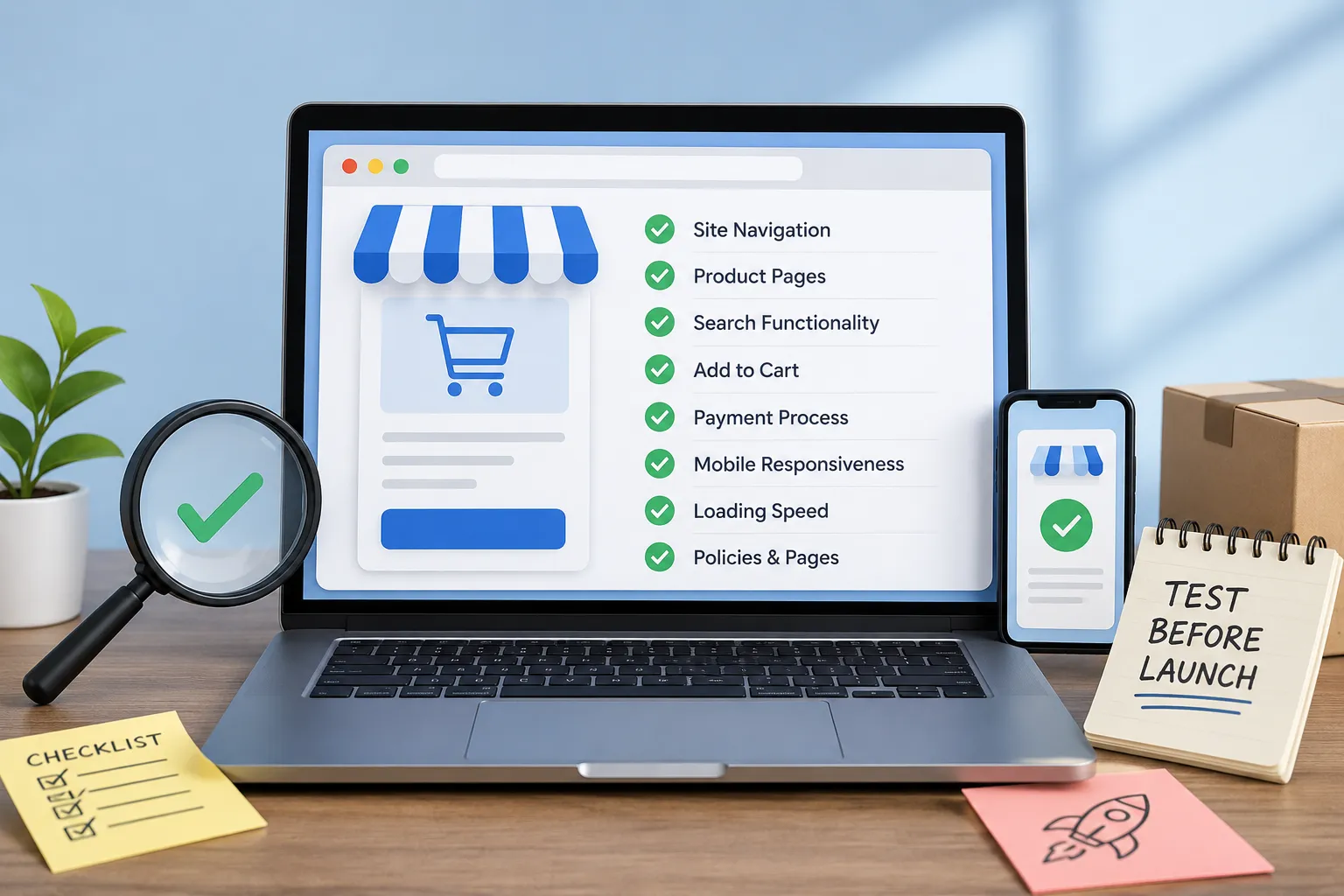
Never assume the store is ready just because the homepage looks good.
Act like a customer.
Start from the beginning.
Open the website.
Find a product.
Read its details.
Select an option.
Add it to the order.
Go through the ordering or checkout process.
Then check what happens from the business side.
Can you see the order?
Is the customer information correct?
Can you manage the order?
Are notifications working as expected?
Also test:
- Product prices
- Out-of-stock products
- Product variations
- Delivery information
- Contact information
- Mobile navigation
- Store policies
- Domain
- Social links
- Payment configuration
- Confirmation messages
Ask another person to test the website as well.
Someone who did not build the store will often find confusing parts you stopped noticing.
10. Launch Your Online Store
`A launch does not need to be a huge event.
Your first objective is to get real people using the store.
If you already sell through Instagram or WhatsApp, start with your existing audience.
Instead of manually sending individual product pictures every time someone asks what is available, send customers to your store where they can browse the full collection.
You can promote your store through:
- TikTok
- Existing customers
- Physical store visitors
- Product packaging
- QR codes
- Paid advertising
- Partnerships and influencers
But remember:
Launching a website does not automatically create customers.
Your website is your selling infrastructure.
Marketing brings people to it.
Your products, pricing, trust and shopping experience then determine whether those visitors become customers.
How to Help Your Online Store Appear on Google
SEO stands for search engine optimization.
In simple terms, SEO helps search engines understand what your pages are about and helps potential customers discover those pages when they search.
You do not need to stuff keywords into every sentence.
Google's own guidance emphasizes useful, reliable, people-first content and recommends using the terms people search for naturally in important areas such as page titles and headings.
Start with the basics.
Give Every Important Page a Clear Title
Instead of:
Product 193
use:
Women's Black Leather Handbag
when that accurately describes the product.
Write Original Product Descriptions
Avoid copying the exact same supplier description that appears across dozens of other websites.
Explain your product in a way that actually helps your customer.
Use Clear Categories
For example:
Home → Perfumes → Men's Perfume
is much easier to understand than having every product inside one large list.
Use Descriptive URLs
A useful product URL may look like:
yourstore.ae/products/black-leather-handbag
rather than an unclear address full of random parameters.
Add Useful Content
Your website does not have to consist only of product pages.
Useful guides can answer questions customers search for and introduce your business to people before they are ready to buy.
For example, a perfume store might publish:
- How to Choose a Perfume for a Gift
- Oud vs Eau de Parfum: What's the Difference?
- How to Make Perfume Last Longer in Hot Weather
This creates more opportunities for customers to discover your business through search.
Link Related Pages Together
If an article discusses one of your product categories, link naturally to that category.
Google uses links both to discover pages and as part of understanding their relevance.
Good internal linking also makes your website easier for people to explore.
Should You Sell Only Through Instagram or WhatsApp?
Instagram and WhatsApp can be excellent tools for finding customers and communicating with them.
The problem comes when they become your entire ecommerce system.
Imagine having 50 products.
A customer asks:
"Which colors do you have?"
You send photographs.
They ask:
"How much?"
You reply.
They ask for another model.
You send another photograph.
They ask about delivery.
You answer again.
Now repeat that conversation with 20 customers.
A proper online store lets customers find much of this information themselves.
They can:
- Browse products
- Compare options
- Check prices
- Read descriptions
- Select variations
- Review delivery information
- Place an order
You can still use Instagram and WhatsApp.
The difference is that your social channels can bring customers to your store instead of replacing the store.
This is especially useful for businesses that have already built an audience through social media and now want a more structured way to sell.
What Does a Good UAE Online Store Need?
You do not need every advanced ecommerce feature on your first day.
You need a strong foundation.
Before launching, try to have these essentials ready:
- Professional storefront
- Clear product categories
- Good product photographs
- Accurate prices
- Useful descriptions
- Mobile-friendly pages
- Delivery information
- Payment information
- Contact information
- Store policies
- Working order process
- Branded domain
- Basic SEO setup
- A system for managing incoming orders
You can improve everything else as the business grows.
Do not spend six months trying to create the perfect ecommerce website before allowing a single customer to use it.
Launch a good version.
Learn from actual customers.
Then improve it.
How Storexio Helps UAE Businesses Start Selling Online
Storexio is a UAE-focused ecommerce platform built for businesses that want their own professional online store without developing a complete ecommerce system from scratch.
Businesses can use Storexio to bring key ecommerce functions together, including:
- Product management
- Product categories
- Storefront themes
- Order management
- Custom domains
- Mobile-ready shopping
- Promotions and discounts
- Store content management
- Analytics
- Arabic and English storefront content where supported
It can be useful for businesses including:
- Retail shops moving online
- Instagram sellers
- WhatsApp sellers
- New ecommerce brands
- Fashion stores
- Perfume businesses
- Jewelry sellers
- Flower shops
- Beauty brands
- Electronics sellers
- Grocery businesses
- Home décor stores
Instead of starting with custom software development, merchants can create an online store in the UAE using an existing ecommerce foundation and focus more of their attention on products, customers and growth.
Frequently Asked Questions
How do I start an online store in the UAE?
Start by deciding what you want to sell and who your customers are. Make sure your business has the appropriate licence and activity, prepare your products and pricing, choose an ecommerce platform, configure delivery and payment methods, build your product pages, test the store on mobile and then launch.
Do I need a licence to sell online in the UAE?
Businesses selling products or services online in the UAE need to operate under the appropriate commercial licensing and ecommerce activity requirements. The exact licence depends on the emirate, activity, legal structure and whether the business operates through the mainland or a free zone.
Do I need to know programming to create an online store?
No. An online store builder can provide the storefront, catalog, product pages, order-management system and other ecommerce functionality without requiring the merchant to develop the entire platform.
Custom development is still useful when a business needs functionality that a standard ecommerce platform cannot provide.
Can I create an online store if I currently sell through Instagram?
Yes. In fact, an existing social audience can give you a useful starting point. Instead of abandoning Instagram, use it to send interested customers to your online store where they can browse products, see prices and place orders more easily.
Can I use my own domain for an ecommerce store?
Yes, provided your ecommerce platform supports custom domains. A branded domain gives customers a direct web address for your business and can be used consistently across marketing channels.
Is mobile-friendly design important for ecommerce?
Yes. Customers need to be able to comfortably browse products and complete the ordering process from phones and other small screens. Mobile content is also important for Google because Google uses mobile-first indexing.
Do I need hundreds of products before launching?
No. A smaller collection of well-presented products can be enough to start. What matters is that customers understand what you sell, what it costs and how to order it.
When does a UAE business need to register for VAT?
The Federal Tax Authority states that mandatory VAT registration generally applies when taxable supplies and imports exceed AED 375,000, subject to the relevant rules and exceptions. Businesses should confirm their individual tax obligations with the FTA or a qualified professional.
Start Building Your Online Store
Starting an online store in the UAE becomes much easier when you treat it as a series of manageable steps.
You do not need to solve everything on the first day.
Start with:
A clear product → a clear customer → the right business setup → a professional online store → a reliable ordering process → consistent marketing.
Then improve as you learn what your customers actually want.
If you are ready to move beyond taking orders manually through messages, Storexio gives you a structured way to create and manage your own ecommerce storefront for the UAE market.
Comments
No comments yet. Be the first to share your thoughts.
Leave a Comment